
When a child is diagnosed with Autism Spectrum Disorder (ASD), it’s natural to have questions about what supports will help them succeed. Every child with autism has their own unique strengths, interests, and challenges, which is why there is no one-size-fits-all approach to therapy.
Occupational therapy (OT) focuses on helping children develop the skills they need to participate in everyday life. At VanKids Pediatric Therapy in Richmond, we work with children throughout Vancouver and the Lower Mainland to help them become more independent, confident, and successful at home, school, and in their community.
What Does a Pediatric Occupational Therapist Do?
Occupational therapists help children participate in the everyday activities that are meaningful to them. Depending on the child’s goals, this may include:
- Playing with siblings and friends
- Participating in classroom activities
- Eating a wider variety of foods
- Dressing independently
- Managing emotions during challenging situations
- Developing fine motor and handwriting skills
- Improving attention and organization
- Building confidence during community outings
Rather than focusing on a diagnosis alone, we look at how a child’s individual strengths and challenges affect their daily life. Therapy is always personalized to help each child reach goals that matter most to their family.
Common Challenges Children with Autism May Experience
Sensory Processing
Many children with autism experience the world differently through their senses. Some may become overwhelmed by loud sounds, bright lights, certain clothing textures, or busy environments. Others constantly seek movement by climbing, jumping, spinning, or crashing into cushions and furniture.
At VanKids Pediatric Therapy, we use sensory integration principles to better understand how each child processes sensory information. During an assessment, we observe how a child responds to different sensory experiences while also learning from parents about everyday routines and challenges.
For example, one child may have difficulty sitting through circle time because their body is constantly seeking movement, while another may avoid birthday parties because the noise and activity feel overwhelming. Understanding why these behaviours occur helps us create strategies that support better regulation throughout the day.
Our sensory gym provides opportunities for children to safely explore movement through activities such as swings, obstacle courses, climbing, balancing, and heavy work. While children are having fun, they’re also developing body awareness, motor planning, attention, and self-regulation.
Fine Motor Skills
Fine motor skills are essential for school, self-care, and play.
Some children benefit from developing skills such as:
- Pencil grasp and handwriting
- Cutting with scissors
- Buttoning and zipping clothing
- Using utensils during meals
- Building with blocks or LEGO
- Opening containers and managing fasteners
Rather than repeatedly practicing worksheets, we often build these skills through motivating activities. A child who loves superheroes may strengthen hand muscles while rescuing action figures with tongs, while another who enjoys arts and crafts may improve bilateral coordination through creative projects without even realizing they’re working on therapy goals.
Emotional Regulation
Managing big emotions can be challenging for many children with autism.
Some children know they’re upset but don’t yet have the tools to calm their bodies. Others may become frustrated when routines change, when a task feels difficult, or when they have trouble communicating what they need.
Occupational therapy helps children learn to:
- Recognize how their body feels
- Identify emotions
- Develop calming strategies
- Improve flexibility during unexpected changes
- Build frustration tolerance
These skills are taught through play and meaningful activities rather than simply talking about emotions. We also work closely with parents to identify strategies that can be incorporated into daily routines at home.
Executive Functioning
Executive functioning refers to the mental skills that help us plan, organize, remember information, and complete everyday tasks.
Children may have difficulty with:
- Sustaining attention
- Following multi-step directions
- Organizing school materials
- Beginning tasks independently
- Remembering routines
- Shifting between activities
During therapy, we might practice these skills through obstacle courses that require sequencing, games that strengthen working memory, or visual supports that help children become more independent with daily routines.
Social Participation
Occupational therapy is different from social skills training, but it plays an important role in helping children participate successfully alongside others.
Many children want to join activities but find it difficult to keep up with the sensory, motor, or executive functioning demands involved. By improving regulation, motor coordination, attention, and flexibility, children often become more confident participating in classroom routines, playground games, community programs, and family outings.
What Happens During an OT Session?
One of the questions parents ask us most often is, “What does therapy actually look like?”
The answer is simple: it looks like play.
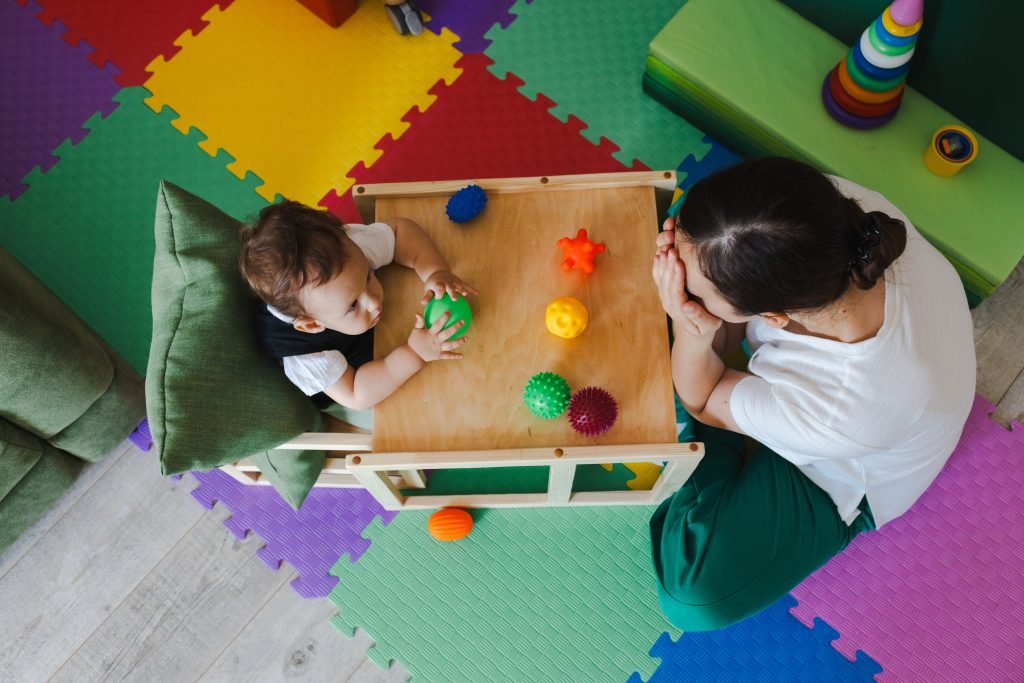
A child might begin by climbing through an obstacle course designed to improve balance, motor planning, and body awareness. Later in the session, they may work on fine motor skills through a favourite craft, practice emotional regulation during a challenging game, or strengthen executive functioning while completing a fun problem-solving activity.
Because children learn best when they’re engaged, we build therapy around their interests whenever possible. Sessions are carefully planned so that meaningful developmental goals are addressed while children remain motivated and successful.
Parent coaching is also an important part of therapy. We discuss strategies that families can use during everyday routines so progress continues beyond the clinic.
Why Early Intervention Matters
Research shows that early intervention can positively influence a child’s development and participation in everyday life.
Occupational therapy may help children improve:
- Independence with daily routines
- Emotional regulation
- School readiness
- Fine and gross motor development
- Self-confidence
- Participation with family and peers
That said, it’s never too late to benefit from occupational therapy. Whether a child is entering preschool or navigating the increasing demands of middle school, therapy can help build skills that support success at every stage of development.
What Goals Do Families Commonly Work On?
Every family’s priorities are different, but some of the most common goals we help children work toward include:
- Sitting through family meals
- Tolerating toothbrushing or haircuts
- Trying new foods
- Dressing more independently
- Improving handwriting
- Participating in classroom routines
- Managing transitions between activities
- Joining peers during play
- Developing confidence in new environments
- Building independence with everyday tasks
These goals may seem small, but they often make a meaningful difference in a child’s daily life and in family routines.
Choosing an Occupational Therapist in Vancouver
When searching for a pediatric occupational therapist, consider whether they:
- Have experience working with autistic children
- Take time to understand your child’s individual strengths
- Include parents as active members of the therapy process
- Use evidence-informed assessment and intervention
- Create engaging, play-based sessions
- Focus on functional goals that matter in everyday life
A strong partnership between families and therapists is one of the most important factors in helping children make meaningful progress.
How VanKids Pediatric Therapy Can Help
At VanKids Pediatric Therapy, we believe every child deserves the opportunity to participate confidently in the activities that are meaningful to them.
We provide individualized occupational therapy for children with autism throughout Richmond, Vancouver, and the Lower Mainland. Services include:
- Autism assessments
- Sensory processing and sensory integration intervention
- Emotional regulation
- Fine motor and handwriting development
- Executive functioning
- School readiness
- Self-care and daily living skills
- Parent coaching and education
- Home and school recommendations
Our approach is collaborative, play-based, and tailored to each child’s unique strengths and goals. We work closely with families to create practical strategies that fit naturally into everyday routines, helping children build skills that carry over beyond the therapy session.
If you’re looking for pediatric occupational therapy for autism in Vancouver or Richmond, we’d be happy to answer your questions and discuss how we can support your child and family.