
Imagine two children arriving at the same playground. One races to the climbing structure, spins on the merry-go-round, and can’t get enough movement. The other hangs back, covers their ears when it gets noisy, and wants to leave after only a few minutes.
Both children are responding to sensory information—but in very different ways.
Sensory integration helps explain why children experience the world differently. It refers to the brain’s ability to receive, organize, and respond to information from the body and the environment so children can participate in everyday activities like playing, learning, eating, and dressing.
At VanKids Pediatric Therapy in Richmond, we help families understand how sensory processing affects their child’s daily life and how occupational therapy can support their development.
What Is Sensory Processing?
Our brains constantly process information from our senses, including:
- Touch
- Vision
- Hearing
- Taste and smell
- Balance (vestibular system)
- Body awareness (proprioception)
- Internal body signals (interoception)
For some children, this process is more challenging.
In our clinic, we often meet children who:
- Cover their ears in noisy places
- Avoid certain clothing or food textures
- Constantly seek movement by jumping, climbing, or crashing
- Become overwhelmed in busy environments
- Have difficulty sitting still
- Avoid messy play
These behaviours aren’t simply choices or “bad behaviour.” They’re often signs that a child’s nervous system is processing sensory information differently.
How Occupational Therapy Helps
Occupational therapists look beyond behaviours to understand why they are happening.
Through an occupational therapy assessment, we identify how sensory processing affects a child’s ability to participate at home, school, and in the community. From there, we develop an individualized treatment plan that may focus on improving:
- Self-regulation
- Attention
- Motor planning
- Balance and coordination
- Fine motor skills
- Independence with daily routines
Every child has different strengths and challenges, so therapy is always personalized.
What Does Sensory Integration Therapy Look Like?
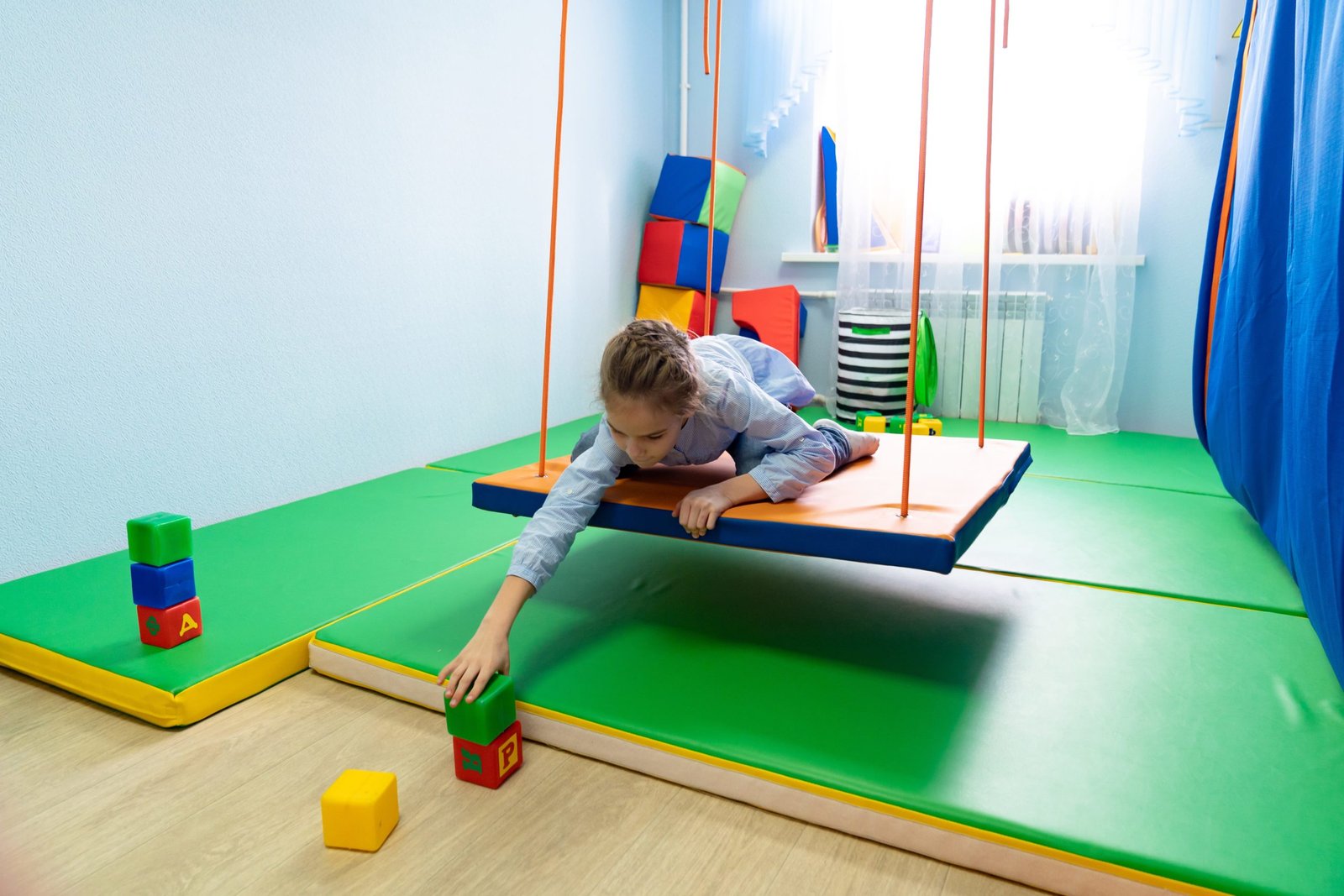
Many parents are surprised to learn that therapy often looks like play.
A child might climb through an obstacle course, use different types of swings, balance on equipment, or complete games that challenge coordination and body awareness. While these activities are fun, each one is carefully chosen to help the child develop stronger sensory processing, motor planning, and self-regulation skills.
At VanKids Pediatric Therapy, our sensory gym provides opportunities for children to explore movement in a safe, engaging environment while working toward meaningful goals.
Who Can Benefit?
Sensory integration therapy may benefit children who experience:
- Autism Spectrum Disorder (ASD)
- ADHD
- Developmental Coordination Disorder (DCD)
- Sensory processing differences
- Emotional regulation challenges
- Motor planning difficulties
- Fine motor delays
An occupational therapy assessment helps determine whether sensory processing is contributing to your child’s everyday challenges.
Signs Your Child May Benefit from an OT Assessment
You may want to consider an assessment if your child:
- Frequently has meltdowns during transitions
- Constantly seeks movement
- Avoids playground equipment
- Is highly sensitive to sounds, clothing, or food textures
- Has difficulty paying attention
- Struggles with handwriting or self-care routines
- Becomes overwhelmed in everyday environments
How VanKids Pediatric Therapy Can Help
At VanKids Pediatric Therapy, we provide comprehensive occupational therapy assessments and individualized intervention for children experiencing sensory processing challenges throughout Richmond, Vancouver, and the Lower Mainland.
Our approach is child-centered, play-based, and tailored to each child’s unique strengths. We work closely with families to create practical strategies that help children participate more confidently at home, school, and in the community.
If you’re looking for sensory integration therapy in Richmond or pediatric occupational therapy in Vancouver, we’d be happy to answer your questions and discuss how we can support your child and family.